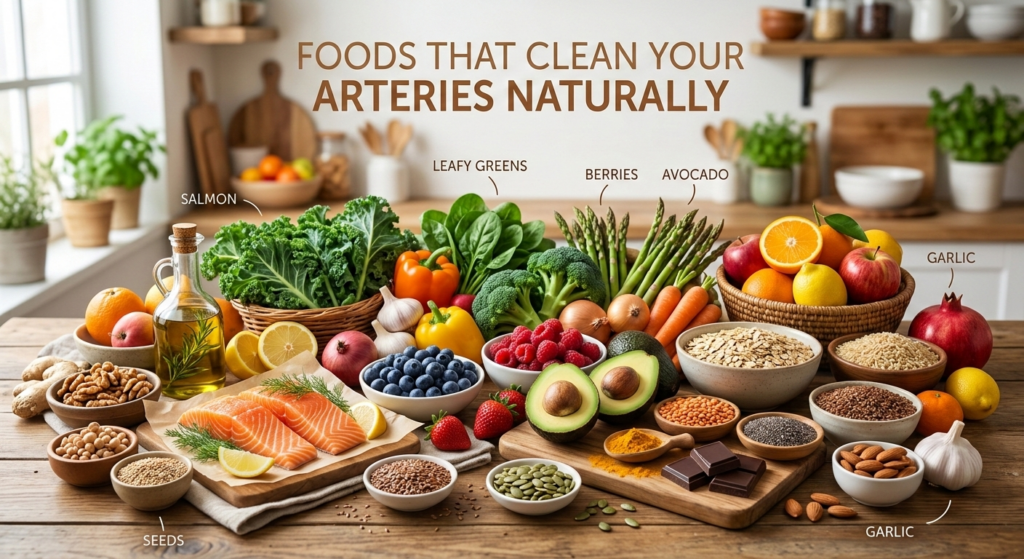
Clogged arteries happen when fatty deposits (plaque) build up inside blood vessels, reducing blood flow and increasing the risk of heart attack and stroke. The good news is that certain foods can naturally help reduce plaque buildup, lower inflammation, improve cholesterol levels, and support healthier arteries. While food cannot magically “scrub” arteries clean overnight, consistent dietary changes can significantly improve cardiovascular health and even help reverse early damage.
Key Takeaways
- Healthy fats, fiber, and antioxidants are foundational for improving artery health
- Omega-3-rich foods and plant-based compounds reduce inflammation and plaque buildup
- Garlic, leafy greens, and berries help improve blood vessel function naturally
- Avoiding processed foods and added sugars prevents further arterial damage
- Persistent chest pain, shortness of breath, or high cholesterol requires medical evaluation
What Does It Mean to “Clean” Your Arteries?
“Cleaning” your arteries doesn’t mean physically washing them out. It refers to reducing plaque buildup, lowering bad cholesterol (LDL), increasing good cholesterol (HDL), and decreasing inflammation that damages blood vessel walls.
Plaque forms when cholesterol, fat, calcium, and other substances stick to artery walls. Over time, this narrows arteries (atherosclerosis), making it harder for blood to flow freely. This increases the risk of heart attack, stroke, and high blood pressure.
The good news is your body can repair and improve artery health when you provide the right nutrients and reduce harmful habits. Think of it like clearing rust from pipes slowly over time by improving water quality.
Common Causes of Clogged Arteries
Understanding what damages your arteries helps you prevent further buildup.
- Poor Diet: High intake of processed foods, trans fats, and refined sugars increases bad cholesterol and inflammation.
- Smoking: Damages blood vessel lining and accelerates plaque buildup.
- High LDL Cholesterol: Excess “bad” cholesterol sticks to artery walls.
- High Blood Pressure: Constant pressure damages artery lining, making plaque more likely.
- Diabetes: High blood sugar damages blood vessels and increases inflammation.
- Obesity: Linked to high cholesterol, high blood pressure, and chronic inflammation.
- Sedentary Lifestyle: Lack of movement reduces circulation and lowers protective HDL cholesterol.
7 Foods That Clean Your Arteries Naturally
These foods support heart health and may help reduce plaque buildup when eaten consistently.
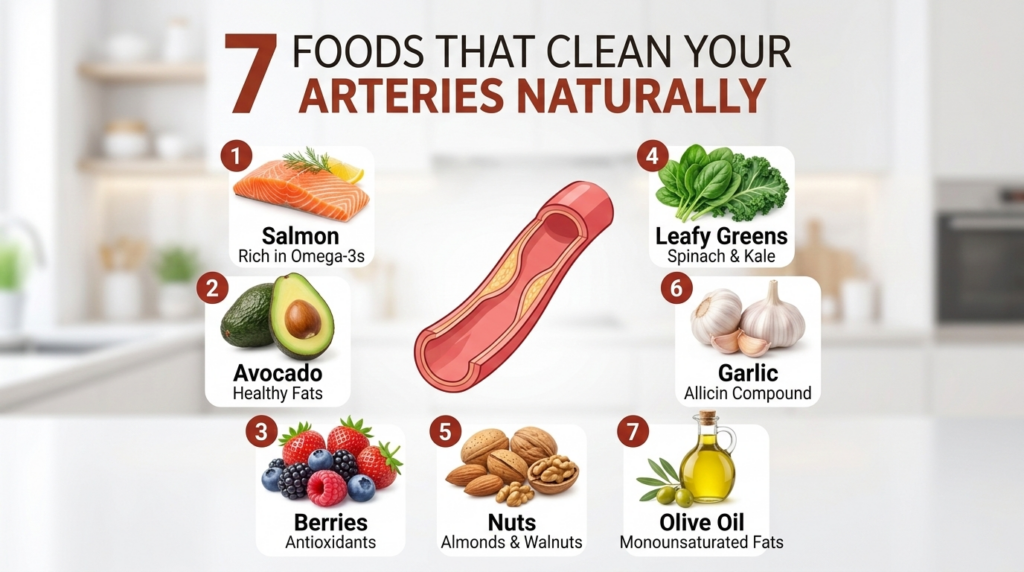
1. Fatty Fish (Salmon, Sardines, Mackerel)
Fatty fish are rich in omega-3 fatty acids (EPA and DHA), which reduce inflammation, lower triglycerides, and improve blood vessel flexibility. Omega-3s help prevent plaque from becoming unstable and reduce clot formation risk.
How to Use It:
- Eat fatty fish at least 2–3 times per week.
- Choose wild-caught when possible.
- Bake, grill, or steam instead of frying.
- Consider a high-quality fish oil supplement after consulting your doctor.
Consistent intake can significantly lower heart disease risk within months.
2. Leafy Green Vegetables (Spinach, Kale, Arugula)
Leafy greens are high in nitrates, which help blood vessels relax and improve circulation. They also contain antioxidants, fiber, and vitamin K, which help protect artery walls and prevent calcium buildup.
How to Use It:
- Add a large handful of greens to daily meals.
- Blend into smoothies.
- Use as salad bases instead of iceberg lettuce.
- Lightly sauté with olive oil and garlic.
Daily intake supports better blood pressure and vascular function.
3. Berries (Blueberries, Strawberries, Raspberries)
Berries are packed with anthocyanins and antioxidants that reduce oxidative stress and inflammation — two key drivers of plaque formation.
They also improve cholesterol balance and blood vessel flexibility.
How to Use It:
- Eat 1 cup daily as a snack or with breakfast.
- Add to oatmeal or yogurt.
- Choose fresh or frozen without added sugar.
Regular consumption improves heart health markers within weeks.
4. Extra Virgin Olive Oil
Olive oil is rich in monounsaturated fats and polyphenols that reduce LDL oxidation — a major contributor to plaque buildup.
It’s a core component of the Mediterranean diet, which is strongly linked to lower heart disease risk.
How to Use It:
- Use as your primary cooking oil (low to medium heat).
- Drizzle over salads and vegetables.
- Replace butter and margarine with olive oil.
2–4 tablespoons daily supports improved cholesterol levels.
5. Garlic
Garlic contains allicin, a compound shown to reduce blood pressure, lower LDL cholesterol, and decrease arterial stiffness.
It also has anti-inflammatory and antioxidant properties that protect blood vessels.
How to Use It:
- Crush fresh garlic and let it sit 5–10 minutes before cooking.
- Add to sauces, vegetables, and soups.
- Consider aged garlic extract supplements if recommended by a healthcare provider.
Daily intake may help reduce arterial plaque progression.
6. Nuts (Walnuts, Almonds)
Nuts provide healthy fats, fiber, magnesium, and plant sterols that lower bad cholesterol and reduce inflammation.
Walnuts are especially beneficial due to their omega-3 content.
How to Use It:
- Eat a small handful (about 1 ounce) daily.
- Choose raw or dry-roasted without added salt.
- Add to salads, oatmeal, or yogurt.
Regular consumption improves cholesterol and artery flexibility.
7. Oats and Whole Grains
Oats are rich in beta-glucan, a type of soluble fiber that reduces LDL cholesterol by binding it in the digestive system and removing it from the body.
Whole grains also provide steady blood sugar control, reducing artery damage risk.
How to Use It:
- Eat oatmeal for breakfast several times per week.
- Replace white bread and rice with whole-grain options.
- Aim for at least 25–30g of fiber daily.
Lower LDL levels can be seen within 4–6 weeks.
Medical Conditions Linked to Artery Blockage
| Condition | How It Affects Arteries |
|---|---|
| High Cholesterol | Excess LDL deposits in artery walls |
| Hypertension | Damages vessel lining and increases plaque risk |
| Diabetes | High glucose damages arteries and increases inflammation |
| Obesity | Promotes chronic inflammation and cholesterol imbalance |
| Metabolic Syndrome | Combination of high blood sugar, blood pressure, and cholesterol |
| Smoking-Related Disease | Accelerates arterial damage |
Symptoms of Clogged Arteries
Early plaque buildup may have no symptoms. As narrowing worsens, you may notice:
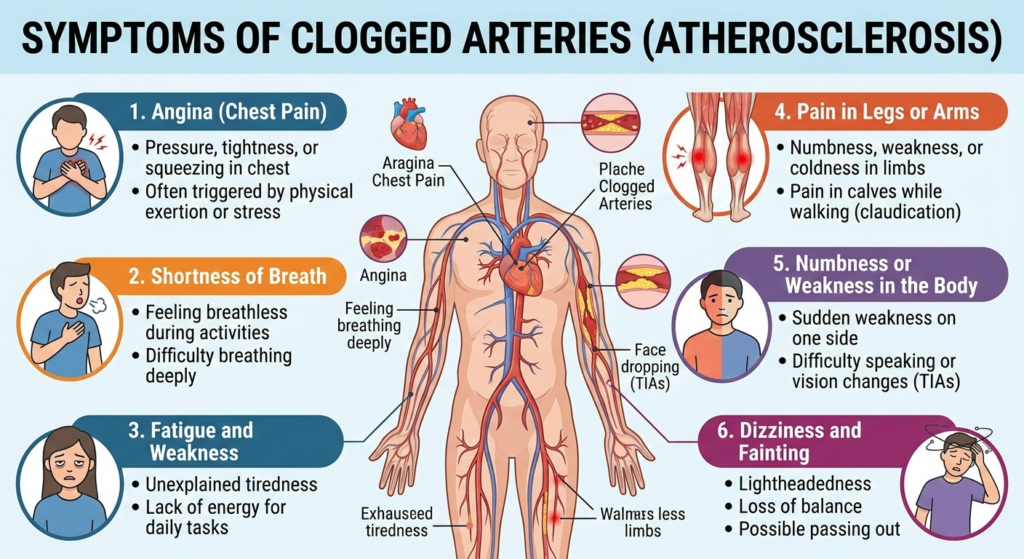
- Chest pain (angina)
- Shortness of breath
- Fatigue with exertion
- Leg pain when walking
- Numbness or weakness
- Cold hands or feet
Sudden chest pressure, arm pain, or trouble speaking requires emergency care.
Activities That Improve Artery Health
Diet works best when combined with healthy habits.
- Aerobic Exercise: 30 minutes of brisk walking, cycling, or swimming improves circulation and HDL cholesterol.
- Strength Training: Builds metabolic health and improves blood sugar control.
- Stress Management: Meditation and deep breathing lower blood pressure.
- Weight Management: Losing 5–10% of body weight improves heart markers.
- Quit Smoking: Dramatically improves vascular health within months.
Best Foods to Avoid for Artery Health
| Food | Why to Avoid |
|---|---|
| Trans Fats | Increase LDL and inflammation |
| Processed Meats | High in saturated fat and sodium |
| Sugary Drinks | Raise blood sugar and triglycerides |
| Refined Carbs | Spike insulin and promote fat storage |
| Deep-Fried Foods | Oxidized fats damage arteries |
| Excess Alcohol | Raises blood pressure and triglycerides |
Best Supplements That May Support Artery Health
Always consult your doctor before starting supplements.
- Omega-3 Fish Oil: 1,000–2,000mg daily to reduce triglycerides.
- CoQ10: Supports heart muscle energy production.
- Fiber Supplements (Psyllium): Helps reduce LDL cholesterol.
- Plant Sterols: Block cholesterol absorption.
- Magnesium: Supports blood pressure regulation.
Long-Term Strategies to Keep Arteries Healthy
Quick changes help, but consistency prevents future damage.
- Follow a Mediterranean-style diet.
- Exercise at least 150 minutes per week.
- Maintain healthy body weight.
- Monitor cholesterol and blood pressure regularly.
- Limit added sugars and processed foods.
- Get 7–9 hours of quality sleep.
When to See a Doctor
Seek Immediate Medical Attention If:
- You experience chest pain or pressure
- Pain spreads to arm, jaw, or back
- Sudden shortness of breath
- Signs of stroke (face drooping, slurred speech, weakness)
Schedule a Doctor Appointment If:
- High cholesterol persists despite diet changes
- Blood pressure remains elevated
- You have diabetes or strong family history of heart disease
- You experience ongoing fatigue or exertion-related chest discomfort
Artery Health Myths and Facts
| Myth | Fact |
|---|---|
| You can completely “flush out” plaque overnight | Artery repair takes time and consistency |
| Only older people get clogged arteries | Plaque buildup can begin in early adulthood |
| Thin people don’t get heart disease | Cholesterol and inflammation matter more than weight alone |
| Supplements alone can fix arteries | Diet and lifestyle are foundational |
| If you feel fine, your arteries are fine | Plaque can build silently for years |
Conclusion
Your arteries don’t become clogged overnight — and they don’t improve overnight either. But the body has an incredible ability to repair itself when you consistently provide the right support. Start with simple changes: eat more fatty fish, leafy greens, berries, olive oil, nuts, and whole grains. Reduce processed foods and added sugars. Move your body daily and manage stress. Over time, these habits reduce inflammation, improve cholesterol levels, and strengthen your blood vessels naturally. If you have risk factors like high cholesterol, diabetes, or high blood pressure, combine nutrition with medical guidance for the best protection. Your heart works every second of your life. Feed it well — and it will take care of you for decades to come.