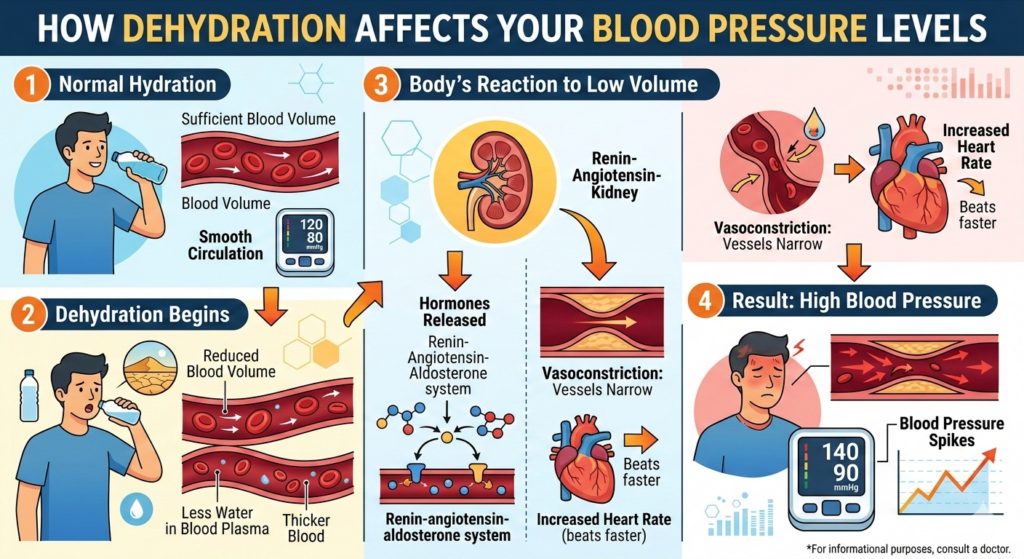
Your blood pressure depends on one thing most people overlook: fluid. Every glass of water you drink directly influences the volume of blood flowing through your arteries, the viscosity of that blood, the responsiveness of your blood vessels, and the hormonal signals your kidneys send to regulate pressure throughout your body. When you become dehydrated, this entire system is thrown off balance. Understanding exactly how dehydration affects your blood pressure, both by causing dangerous drops and by triggering mechanisms that spike it, is essential for anyone managing their cardiovascular health.
Key Takeaways
- Dehydration thickens the blood, forcing the heart to work harder to push it through vessels
- Low fluid volume triggers an initial drop in blood pressure, causing dizziness and fainting risk
- The body compensates by constricting blood vessels and releasing hormones that raise BP
- Chronic mild dehydration is a hidden contributor to sustained high blood pressure over time
- Drinking adequate water daily is one of the simplest, most effective ways to support healthy blood pressure
- Persistent blood pressure irregularities despite hydration require medical evaluation
What Is Dehydration and Why Does It Matter for Blood Pressure?
Dehydration occurs when your body loses more fluid than it takes in, leaving cells, tissues, and your bloodstream without enough water to function properly. Even mild dehydration of just 1 to 2 percent of your body weight in fluid loss can trigger measurable changes in cardiovascular function. Blood is approximately 90 percent water, which means fluid levels have a direct and immediate impact on blood volume. Blood volume, in turn, is one of the primary factors your heart and blood vessels use to regulate blood pressure. When volume drops, a cascade of compensatory responses begins, and depending on how your body responds, your blood pressure can swing either dangerously low or problematically high.
The connection between hydration and blood pressure is so significant that doctors routinely check hydration status when investigating unexplained blood pressure abnormalities. Yet most people remain unaware of how closely their daily water intake ties to their cardiovascular stability.
How Dehydration Affects Blood Pressure: Overview
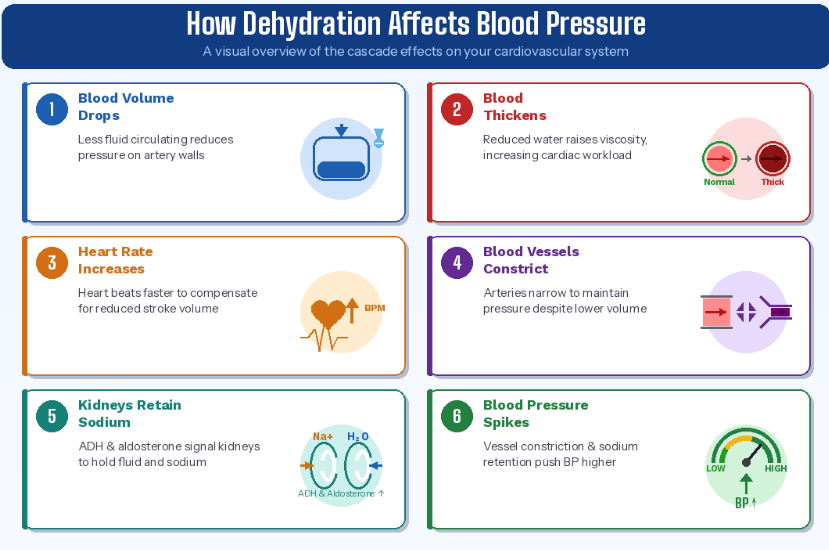
| Effect | What Happens in the Body |
| Blood volume drops | Less fluid means less blood circulating, reducing pressure on artery walls |
| Blood thickens | Reduced water content raises viscosity, increasing cardiac workload |
| Heart rate increases | Heart beats faster to compensate for reduced stroke volume |
| Blood vessels constrict | Arteries narrow to maintain pressure despite lower volume |
| Kidneys retain sodium | ADH and aldosterone hormones signal kidneys to hold fluid and sodium |
| Blood pressure spikes | Vessel constriction and sodium retention push BP higher than normal |
1. Dehydration Reduces Blood Volume
The most direct way dehydration affects blood pressure is by reducing blood volume. Your circulatory system maintains pressure the same way water in a hose does: the more volume flowing through, the more pressure it exerts on the walls. When you are well hydrated, your blood volume sits at roughly 5 liters in the average adult. Dehydration shrinks this volume, and the immediate result is a drop in pressure throughout the system.
This is why low blood pressure (hypotension) is one of the first clinical signs of significant dehydration. Emergency rooms regularly see dehydrated patients with blood pressure readings far below normal, accompanied by rapid heart rate as the body frantically tries to compensate. Even in non-emergency dehydration, mild reductions in blood volume can cause the lower blood pressure readings many people notice after a night of poor sleep, excessive sweating, or inadequate fluid intake.
Signs That Low BP From Dehydration Is Affecting You:
- Lightheadedness or dizziness when standing up quickly (orthostatic hypotension)
- Feeling faint or unsteady after exercise, heat exposure, or a long period without drinking
- Low energy and brain fog that improves significantly after drinking 2 glasses of water
- Rapid or pounding heartbeat at rest as the heart compensates for reduced volume
- Dark yellow or amber urine, which is one of the most reliable early indicators of dehydration
2. Dehydration Thickens the Blood
Water is what keeps blood flowing smoothly through your vessels. When fluid levels drop, blood becomes more viscous, meaning thicker and stickier. This increased viscosity makes it significantly harder for your heart to pump blood efficiently through the 60,000 miles of blood vessels in your body. Your heart must generate more force with each beat, which over time increases the strain on the heart muscle and contributes to elevated blood pressure.
Thick blood also moves more slowly through capillaries, reducing oxygen and nutrient delivery to tissues including the brain, muscles, and organs. This is why dehydration causes fatigue, headaches, and cognitive slowness: your tissues are not getting adequate circulation. Additionally, thicker blood is more prone to clotting, which is one reason dehydration is a recognized risk factor for deep vein thrombosis and cardiovascular events, particularly in older adults and during air travel.
How to Restore Blood Fluidity:
- Drink 400 to 500ml of water as soon as you notice dehydration symptoms, sipping steadily rather than gulping
- Add electrolytes if you have been sweating heavily, as sodium and potassium help the body retain and distribute fluids effectively
- Eat water-rich foods like cucumber, watermelon, celery, and oranges which contribute meaningfully to daily fluid intake
- Avoid excess alcohol and caffeine on hot days or during exercise, as both increase fluid loss through diuresis
- Monitor the color of your urine and aim for pale straw yellow as a reliable daily indicator of adequate hydration
3. The Kidneys Trigger Hormones That Raise Blood Pressure
When the body detects low blood volume, it does not simply accept lower pressure. Instead, it activates a powerful hormonal system designed to restore pressure as quickly as possible. The kidneys respond to dehydration by releasing renin, which triggers a cascade known as the renin-angiotensin-aldosterone system (RAAS). This system signals the adrenal glands to produce aldosterone, a hormone that tells the kidneys to retain sodium and water rather than excreting them in urine.
Simultaneously, the brain releases antidiuretic hormone (ADH), also known as vasopressin, which further reduces urine output and causes blood vessels to constrict. The combined effect of these hormones is a significant rise in blood pressure as the body attempts to compensate for fluid loss. While this response is lifesaving in the short term, chronic activation of this system due to habitual under-hydration keeps blood pressure chronically elevated and contributes to long-term hypertension risk.
The RAAS Cascade in Dehydration:
- Low blood volume detected by kidneys and baroreceptors in blood vessel walls
- Kidneys release renin, triggering conversion of angiotensinogen to angiotensin I and then angiotensin II
- Angiotensin II causes blood vessels to constrict and signals adrenal glands to release aldosterone
- Aldosterone causes kidneys to retain sodium, which pulls water back into the bloodstream
- ADH from the brain further reduces urination and increases vessel constriction
- Blood pressure rises as volume is partially restored and vessels tighten
4. Blood Vessels Constrict to Compensate
One of the fastest responses to falling blood pressure is vasoconstriction, the narrowing of blood vessel walls. When the nervous system and hormones detect inadequate blood volume, they signal the smooth muscle in artery walls to contract, reducing the diameter of the vessels. This narrowing maintains pressure even with less fluid inside, much like putting your thumb over the end of a garden hose to increase pressure without increasing water flow.
The problem is that vasoconstriction significantly increases the resistance your heart must overcome with each beat. This is measured clinically as peripheral vascular resistance, and it is one of the primary mechanisms behind hypertension. When dehydration is chronic or repeated, the blood vessels can become less responsive and less elastic over time, making sustained high blood pressure even more likely. People who are chronically mildly dehydrated often have measurably stiffer arteries than those who maintain good hydration.
5. Chronic Mild Dehydration and High Blood Pressure
While severe dehydration causes an acute blood pressure drop, chronic mild dehydration, the kind most people live with day to day without realizing it, keeps the RAAS system and vasoconstriction mechanisms continuously activated at a low level. The result is a persistent, subtle elevation of blood pressure that may not feel dramatic but accumulates significant cardiovascular risk over years.
Research has found that people who drink fewer than 5 glasses of water per day have measurably higher rates of hypertension compared to those who drink 6 or more glasses. The mechanism is straightforward: persistent under-hydration keeps sodium retention elevated, vessels slightly constricted, and the heart working harder than it needs to. Simply increasing water intake has been shown to reduce blood pressure readings in some hypertensive patients, particularly those who are older or who live in warm climates.
Dehydration Severity and Blood Pressure Impact
| Dehydration Level | Fluid Loss | Blood Pressure Effect |
| Mild | 1-2% body weight | Slight BP drop; slight heart rate increase; early hormone activation |
| Moderate | 3-5% body weight | Significant BP drop; marked vessel constriction; noticeable dizziness and fatigue |
| Severe | 6-8% body weight | Severe hypotension; shock risk; emergency RAAS activation; possible organ damage |
| Chronic Mild | Ongoing 1-2% daily | Persistently elevated BP; increased hypertension risk; arterial stiffening over time |
Warning Signs That Dehydration Is Affecting Your Blood Pressure
Recognizing the symptoms of dehydration-related blood pressure changes early allows you to take corrective action before they escalate into a serious cardiovascular event. The symptoms differ depending on whether your blood pressure has dropped or whether your body has already activated compensatory mechanisms to raise it.
Signs of Dehydration-Related Low Blood Pressure:
- Sudden dizziness or lightheadedness when standing up from sitting or lying down
- Feeling faint, weak, or unsteady without an obvious reason
- Rapid or irregular heartbeat at rest
- Cold, clammy, or pale skin due to reduced circulation
- Blurred vision or difficulty concentrating following exercise or heat exposure
- Dark urine, dry mouth, or significantly reduced urine output throughout the day
Signs of Compensatory High Blood Pressure From Dehydration:
- Throbbing headaches especially at the back of the head or temples
- Facial flushing or feeling hot without fever
- Tension in the neck and shoulders that does not resolve with stretching
- Feeling wired or anxious despite tiredness, as adrenaline and stress hormones remain elevated
- Higher than normal blood pressure readings at home that improve after drinking adequate water
Seek Immediate Medical Attention If You Experience:
- Blood pressure below 90/60 mmHg combined with confusion, cold skin, or rapid breathing
- Fainting or near-fainting episodes, particularly in heat or after exercise
- Severe headache with visual changes or neurological symptoms alongside very high blood pressure
- Chest pain or shortness of breath alongside elevated heart rate and dry mouth
Who Is Most at Risk for Dehydration-Related Blood Pressure Problems?
While dehydration affects everyone's blood pressure to some degree, certain groups face significantly higher risk of serious blood pressure fluctuations from inadequate fluid intake.
| At-Risk Group | Why They Are Especially Vulnerable |
| Older adults (65+) | Reduced thirst sensation means they often do not feel dehydrated until it is severe; kidneys are less efficient at conserving water |
| People with hypertension | Blood pressure medications like diuretics increase fluid loss, making dehydration more likely and impactful |
| Athletes and active individuals | High sweat rates during exercise deplete both fluid and electrolytes rapidly, destabilizing blood pressure |
| People in hot climates | Continuous sweating without adequate replacement leads to chronic mild dehydration and elevated baseline BP |
| Diabetes patients | High blood sugar promotes excess urination, leading to accelerated fluid and electrolyte depletion |
| Pregnant women | Increased blood volume requirements mean dehydration has an outsized effect on cardiovascular stability |
| People on low-sodium diets | Very low sodium without adequate water balance can disrupt the RAAS system and blood pressure regulation |
How Much Water Do You Need to Support Healthy Blood Pressure?
There is no single universal answer, because fluid needs depend on body size, activity level, climate, diet, and individual health conditions. However, general evidence-based guidelines provide a useful starting framework for most healthy adults.
- Aim for 2 to 3 liters (8 to 12 cups) of total fluid per day from all sources including water, tea, and food
- Increase intake by 500ml to 1 liter for every hour of moderate exercise or significant sweating
- Add an extra 500ml on hot days, during air travel, or whenever you consume alcohol or excess caffeine
- Eat water-rich foods regularly: cucumber (96% water), watermelon (92%), tomatoes (95%), and leafy greens all contribute substantially
- Use urine color as your daily guide: pale straw yellow indicates good hydration; darker yellow or amber signals you need more fluid
- If you take diuretic blood pressure medications, discuss optimal fluid intake with your doctor to avoid over or under-hydration
People managing high blood pressure should note that while adequate hydration supports healthy BP, excessive fluid intake does not lower blood pressure further and can stress the kidneys. The goal is consistent, moderate hydration throughout the day rather than large, infrequent drinking sessions.
Best and Worst Drinks for Blood Pressure and Hydration
| Drink | Effect on Hydration and Blood Pressure |
| Plain water | Best choice: directly replenishes blood volume with no cardiovascular side effects |
| Coconut water | Natural electrolytes support hydration and potassium content actively helps lower BP |
| Herbal teas (unsweetened) | Hydrating and many varieties (hibiscus, chamomile) have mild BP-lowering properties |
| Low-fat milk | Calcium and potassium support blood pressure regulation alongside hydration |
| Coffee (1-2 cups) | Mildly dehydrating in excess but moderate intake is tolerated by most; avoid if BP-sensitive |
| Alcohol | Significantly dehydrating; raises BP directly and interferes with RAAS; limit strictly |
| Energy drinks | High caffeine and sodium; acutely spike blood pressure and promote dehydration |
| Sugary sodas | High sugar triggers inflammation and insulin response that impairs blood vessel function |
| Sports drinks | Useful during prolonged exercise but high in sodium and sugar for everyday hydration |
How to Rehydrate Safely to Restore Normal Blood Pressure
Rehydrating correctly matters as much as rehydrating at all. Drinking large amounts of plain water very rapidly can dilute sodium levels in the blood, causing a dangerous condition called hyponatremia, particularly in athletes and older adults. A steady, consistent approach is always safer and more effective.
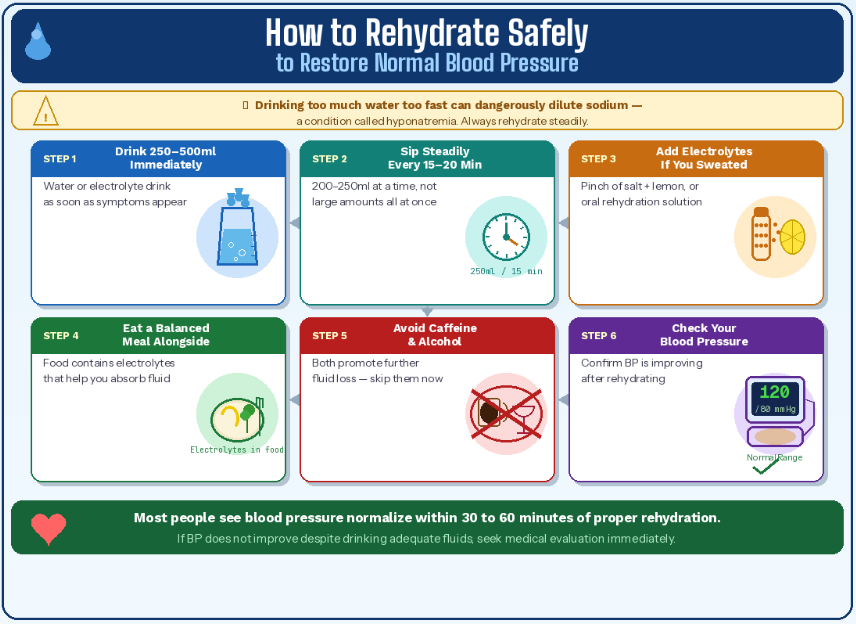
How to Do It:
- Drink 250 to 500ml of water or an electrolyte drink immediately when you notice dehydration symptoms
- Continue drinking at a pace of roughly 200 to 250ml every 15 to 20 minutes rather than large amounts all at once
- If you have been heavily sweating, use an oral rehydration solution or add a small pinch of salt and a squeeze of lemon to water to replace electrolytes
- Eat a balanced meal alongside rehydration as food contains electrolytes that help the body absorb and retain fluid effectively
- Avoid caffeinated or alcoholic drinks when trying to rehydrate, as both continue to promote fluid loss
- Check your blood pressure after rehydrating to confirm improvement, especially if you are monitoring for hypertension or hypotension
Most people with dehydration-related blood pressure drops will see normalization within 30 to 60 minutes of proper rehydration. If blood pressure does not improve or worsens despite drinking adequate fluids, seek medical evaluation.
Long-Term Hydration Habits to Protect Blood Pressure
- Keep a water bottle visible and accessible at all times to make drinking a passive, automatic habit
- Set a phone reminder or use a hydration tracking app to check in on fluid intake every 2 hours
- Start every morning with 500ml of water before coffee, tea, or food to counteract overnight fluid loss
- Build hydrating foods into every meal: a side salad, a piece of fruit, or a vegetable-based soup all contribute meaningfully
- Monitor your blood pressure at the same time each morning and track whether readings correlate with days of good or poor hydration
- If you exercise regularly, weigh yourself before and after workouts and drink approximately 500ml per 500g lost to replenish precisely
- If you are on blood pressure medication, discuss with your doctor how your hydration targets interact with your medication, as some drugs affect fluid balance significantly
Dehydration and Blood Pressure: Myths and Facts
| Myth | Fact |
| Dehydration only lowers blood pressure | Dehydration initially lowers BP, but hormonal compensation rapidly raises it, often above normal |
| You only need water when you feel thirsty | Thirst is a late indicator; by the time you feel thirsty, mild dehydration is already affecting blood pressure |
| Coffee and tea don't count toward hydration | Moderate amounts of coffee and tea do contribute to fluid intake; excessive amounts have a net diuretic effect |
| Drinking more water cures hypertension | Hydration supports healthy blood pressure but does not replace medication or lifestyle changes for diagnosed hypertension |
| Sports drinks are better than water for hydration | For everyday hydration, plain water is superior; sports drinks are only beneficial during prolonged intense exercise |
| Dark urine just means concentrated vitamins | While some supplements darken urine, persistently dark urine most often indicates dehydration requiring attention |
| Healthy young people don't need to worry about this | Dehydration affects blood pressure at any age; young athletes and active individuals are particularly vulnerable |
When to See a Doctor
Most dehydration-related blood pressure changes resolve with proper rehydration and improved daily fluid habits. However, certain situations require prompt medical evaluation to rule out more serious underlying causes.
Schedule a Doctor Appointment If:
- Blood pressure readings remain abnormal despite consistent, adequate hydration for more than one to two weeks
- You experience repeated episodes of dizziness, fainting, or orthostatic hypotension despite drinking enough fluids
- You are taking blood pressure medication and notice significant fluctuations that may relate to hydration and medication interaction
- You have diabetes, kidney disease, or heart failure and are managing both blood pressure and fluid balance simultaneously
- You consistently feel thirsty despite drinking what seems like adequate amounts of water, as this can signal diabetes insipidus or other conditions
- Blood or significant abnormalities appear in urine tests alongside blood pressure irregularities
Conclusion
Water is not just a thirst quencher. It is a fundamental input into your cardiovascular system. Every glass you drink helps maintain blood volume, keeps blood flowing smoothly, reduces the hormonal pressure your kidneys place on your arteries, and supports the elasticity your blood vessels need to regulate pressure naturally. Dehydration disrupts all of these processes simultaneously, creating a chain of cardiovascular stress that ranges from a dangerous drop in pressure to a compensatory spike driven by stress hormones and vasoconstriction.
The good news is that this is one of the most reversible cardiovascular risk factors in existence. Unlike genetics or age, your hydration level is entirely within your control. By drinking adequate water consistently, monitoring your urine color, eating hydrating foods, and adjusting for exercise and heat, you can protect your blood pressure simply and effectively every single day. If you are managing hypertension or taking blood pressure medication, talk to your doctor about how personalized hydration targets can complement your treatment and help you achieve more stable, healthier readings over time.