Cognitive function is central to how the brain supports thinking, learning, memory, attention, and decision making in everyday life. It influences how individuals process information, solve problems, regulate emotions, and adapt to changing situations. From academic performance and workplace efficiency to social interaction and emotional balance, cognitive function plays a critical role across all stages of life. Understanding what cognitive function is, what affects it, how it changes, and how it can be improved is essential for maintaining brain health, mental clarity, and long-term quality of life.
Key Takeaways
- Cognitive function enables thinking, learning, memory, attention, and decision making in daily life.
- Multiple brain systems work together to support focus, reasoning, communication, and problem solving.
- Cognitive performance is influenced by sleep, nutrition, physical activity, stress, and overall brain health.
- Cognitive abilities can strengthen or decline over time depending on lifestyle and health factors.
- Early changes often appear as reduced concentration, slower thinking, or forgetfulness.
- Supporting cognitive function helps maintain productivity, independence, and quality of life at all ages.
What is cognitive function?
Cognitive function refers to the brain’s ability to receive information, process it, store it, and use it for thinking, learning, memory, attention, and decision making. It includes interconnected mental abilities such as reasoning, language, problem solving, processing speed, and executive control that allow individuals to understand their environment, focus on tasks, communicate effectively, regulate emotions, and adapt to new situations. Cognitive function plays a vital role in academic performance, work productivity, and daily life, and it depends on healthy brain networks and efficient neural communication. These abilities are not fixed and can strengthen or decline over time based on lifestyle choices, mental engagement, stress levels, sleep quality, physical activity, and overall brain health.
Types of Cognitive Function
Cognitive function is made up of several interconnected mental abilities that work together to support thinking, behavior, and daily performance. Each type plays a distinct role, but all rely on coordinated brain activity.
- Memory:Memory enables the brain to store, retain, and recall information when needed. It supports short-term memory for immediate tasks, working memory for active thinking and reasoning, and long-term memory for preserving knowledge, skills, and personal experiences over time.
- Attention:Attention allows individuals to focus on relevant information while filtering out distractions. It supports sustained concentration, selective focus on important stimuli, and the ability to shift attention efficiently between tasks without losing accuracy.
- Executive Function:Executive function governs higher-level thinking and self-control. It enables planning, organization, time management, impulse regulation, emotional control, and flexible problem solving, especially in complex or changing situations.
- Language Function:Language function supports the understanding and expression of communication. It allows individuals to comprehend spoken and written language, use vocabulary effectively, express ideas clearly, and interpret meaning during conversations and reading.
- Processing Speed:Processing speed reflects how quickly the brain interprets information and produces responses. It influences reaction time, learning efficiency, decision making, and the amount of mental effort required to complete tasks.
- Visuospatial Skills:Visuospatial skills allow the brain to understand visual and spatial relationships. They support navigation, object recognition, distance judgment, pattern identification, and interpreting maps, diagrams, and physical space.
Factors Affecting Cognitive Function
Cognitive function is shaped by a combination of biological, lifestyle, psychological, environmental, and health-related factors. These influences determine how efficiently the brain processes information, maintains mental clarity, and adapts over time. Some factors strengthen cognitive performance, while others gradually weaken it if not addressed.
- Biological Factors:Biological processes form the foundation of cognitive performance. Genetic makeup influences brain structure, neural connectivity, and baseline cognitive potential. Age-related changes naturally affect memory capacity, processing speed, and attention control, while overall neurological health determines how effectively neurons communicate and support thinking, learning, and decision making.
- Lifestyle Factors:Daily habits play a major role in supporting or weakening brain function. Quality sleep enhances memory consolidation, learning efficiency, and mental clarity, while physical activity improves blood flow and oxygen delivery to the brain. Nutrition provides essential nutrients for neurotransmitter production and neural activity, whereas excessive alcohol or substance use can interfere with attention, memory, and reaction speed.
- Psychological Factors:Mental and emotional states directly influence cognitive efficiency. Chronic stress impairs focus, working memory, and executive control by disrupting neural communication. Anxiety increases mental distraction and reduces attention stability, while depression lowers motivation, cognitive flexibility, and mental engagement, making everyday tasks feel more demanding.
- Environmental Factors:External surroundings shape long-term cognitive resilience. Education and regular mental stimulation strengthen cognitive reserve and adaptability, while social interaction supports memory, language skills, and emotional regulation. In contrast, noisy or cluttered environments increase cognitive load, and exposure to toxins or head injury raises the risk of lasting cognitive difficulties.
- Health Factors:Overall physical health strongly affects brain performance. Chronic illnesses can reduce oxygen and nutrient delivery to the brain, while cardiovascular and metabolic health influence cerebral blood flow and mental sharpness. Certain medications may slow cognitive processing, and nutrient deficiencies can disrupt neurotransmitter function and cognitive balance.
Symptoms of Reduced Cognitive Function
Changes in cognitive function vary depending on the affected mental ability and severity. Early signs are often subtle but may gradually interfere with daily activities if not addressed.
Common Cognitive Changes by Function
| Cognitive Area | Common Symptoms | Impact on Daily Life |
| Memory | Forgetting recent events, misplacing items, repeating questions, difficulty learning new information | Trouble retaining instructions, managing schedules, or recalling important details |
| Attention | Reduced focus, easy distraction, difficulty sustaining concentration, mental fatigue | Difficulty completing tasks, following conversations, or maintaining productivity |
| Executive Function | Poor planning, disorganization, impulsive decisions, difficulty adapting to change | Problems managing responsibilities, finances, time, or complex tasks |
| Language | Word-finding difficulty, slowed or unclear speech, reduced comprehension | Communication challenges, misunderstandings, and reduced social confidence |
| Processing Speed | Slower thinking, delayed responses, increased mental effort | Reduced efficiency, difficulty keeping pace in fast or demanding environments |
| Visuospatial Skills | Difficulty navigating, judging distance, recognizing objects or patterns | Problems with driving, reading maps, interpreting diagrams, or spatial tasks |
Effects of Reduced Cognitive Function
Reduced cognitive function affects how the brain processes information, regulates behavior, and adapts to daily demands. When multiple cognitive systems are impacted, everyday functioning becomes less efficient and more mentally demanding. These effects extend across personal, professional, and social areas of life.
- Daily Functioning:Reduced cognitive function makes everyday tasks more mentally demanding by affecting memory, attention, and executive control. Activities such as following instructions, organizing schedules, managing household tasks, or remembering appointments require increased effort. Over time, individuals may rely more on reminders, notes, or external assistance to maintain independence.
- Work and Academic Performance: In professional and academic settings, reduced processing speed, concentration, and organization impair productivity and learning efficiency. Completing tasks takes longer, errors become more frequent, and managing deadlines or multitasking becomes difficult. Mental fatigue often increases during prolonged or complex work, reducing overall performance.
- Emotional and Psychological Health:Cognitive strain disrupts emotional regulation and stress tolerance. Frustration, irritability, and lowered self-confidence may develop as mental tasks feel more challenging. Persistent cognitive difficulties can contribute to anxiety or depressive symptoms, further reducing motivation and mental clarity.
- Social Interaction:Difficulties with attention, memory, and language processing reduce communication clarity and social responsiveness. Conversations may be harder to follow, leading to misunderstandings or mental exhaustion during interactions. As confidence decreases, individuals may gradually limit social participation.
- Long-Term Effects:When cognitive function remains reduced over time, adaptability and functional independence decline. Tasks that were once manageable may require increasing effort or support. Long-term cognitive reduction can lower overall quality of life and increase vulnerability to further cognitive and functional challenges.
7 Ways to Improve Brain Performance
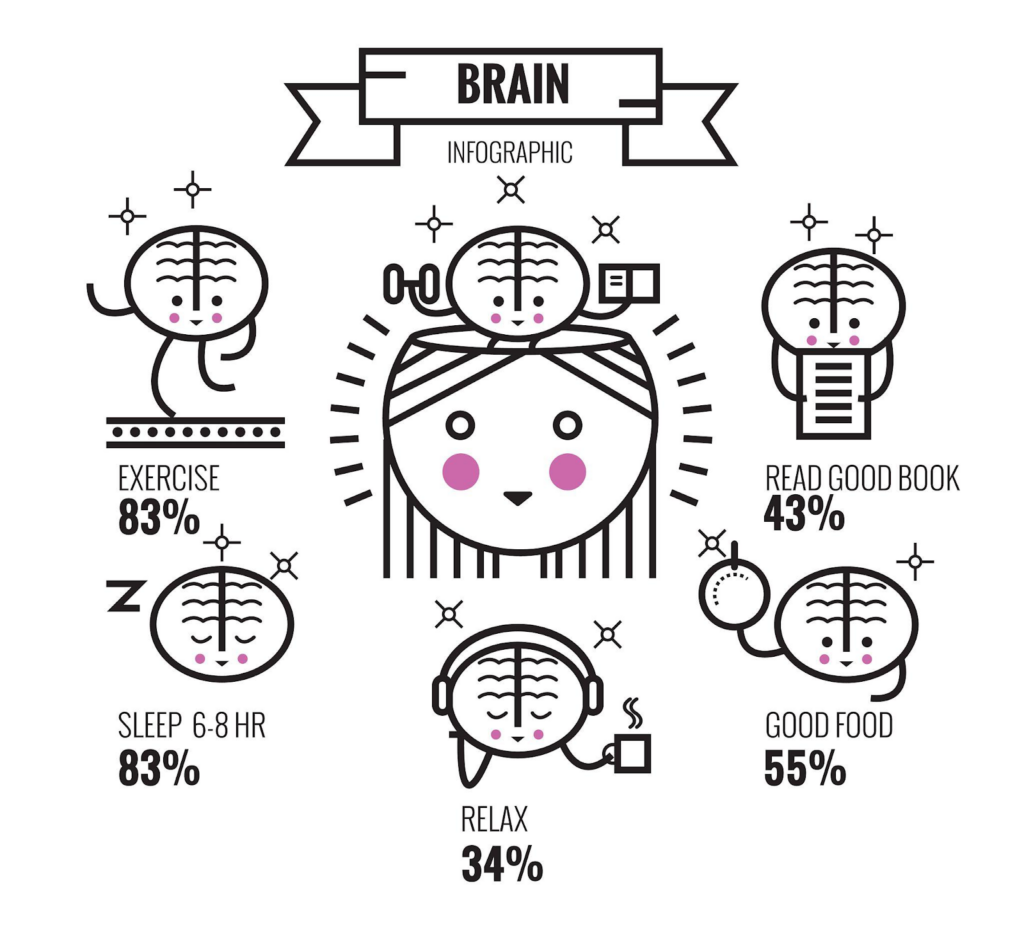
Brain performance improves when daily habits support neural communication, energy balance, and mental recovery. These evidence-based strategies strengthen memory, focus, learning capacity, and overall cognitive efficiency over time.
1. Quality Sleep
Quality sleep acts as essential maintenance for the brain, allowing neural repair, memory organization, and cognitive reset. During deep sleep stages, the brain strengthens connections involved in learning, clears metabolic waste that slows thinking, and restores attention and emotional regulation. Consistent sleep routines support decision making and mental clarity, while chronic sleep deprivation reduces processing speed, working memory, and cognitive flexibility.
2. Physical Activity
Physical activity enhances brain performance by improving circulation and neurochemical balance. Regular movement increases blood flow and oxygen delivery to the brain, stimulates neurotransmitters that support focus and mood, and strengthens attention control and processing speed. Maintaining physical fitness also protects against mental fatigue and age-related cognitive decline.
3. Nutrition
The brain depends on steady, high-quality nutrition to function efficiently throughout the day. Balanced meals stabilize blood sugar levels, preventing mental crashes and brain fog, while healthy fats support neuron structure and signal transmission. Vitamins and minerals aid neurotransmitter production, whereas poor dietary habits increase inflammation and impair memory, attention, and clarity.
4. Challenging the Brain
Mental stimulation strengthens cognitive flexibility and builds long-term brain resilience. Learning new skills encourages neuroplasticity and neural growth, while problem-solving activities enhance executive function and reasoning ability. Regular exposure to novel mental challenges prevents cognitive stagnation and builds cognitive reserve that protects overall brain health.
5. Stress Management
Uncontrolled stress disrupts cognitive systems responsible for memory, focus, and emotional balance. Chronic stress hormones interfere with neural communication and attentional control, reducing learning capacity and mental efficiency. Stress reduction techniques such as mindfulness and relaxation improve focus stability and emotional regulation, preserving long-term cognitive performance.
6. Social Engagement
Social interaction stimulates multiple cognitive systems at the same time, including memory, language, and attention. Conversation and emotional interaction support executive control and emotional regulation, while regular social engagement reduces the risk of cognitive decline. Meaningful connections help keep thinking flexible, responsive, and adaptive over time.
7. Reducing Digital Overload
Excessive multitasking strains attention and weakens mental efficiency. Frequent task switching increases cognitive load and reduces accuracy, while focused single-task work improves depth of processing and information retention. Setting digital boundaries protects sustained attention and mental endurance, restoring clarity, productivity, and cognitive balance.
Fun Facts About Cognitive Function
Cognitive function is not only essential for thinking, learning, and decision making, but it also has many fascinating characteristics that reveal how powerful and adaptable the brain is. These facts highlight how the brain uses energy, changes through learning, and responds to lifestyle habits across the lifespan.
- Your brain uses about 20 percent of the body’s total energy, even during rest, showing how demanding cognitive activity is.
- Learning a new skill physically reshapes the brain by creating and strengthening new neural connections.
- Sleep plays a critical role in memory formation, as the brain organizes, filters, and strengthens information during deep sleep.
- Multitasking reduces cognitive efficiency because the brain rapidly switches between tasks rather than processing them simultaneously.
- Regular physical exercise improves cognitive function by increasing blood flow, oxygen delivery, and nutrient supply to the brain.
- Social interaction activates multiple cognitive systems at once, including memory, language, attention, and emotional regulation.
- The brain remains adaptable throughout life, meaning cognitive function can improve at any age through learning and mental engagement.
- Mental challenges such as puzzles or learning languages help build cognitive reserve, which protects against age-related decline.
Conclusion
Cognitive function is central to how individuals think, learn, remember, and manage daily life, influencing decision making, emotional regulation, productivity, and social interaction. It is supported by interconnected abilities such as memory, attention, executive control, language, and processing speed, all of which rely on healthy brain networks. Cognitive function is not static and can strengthen or decline over time depending on lifestyle choices, mental engagement, sleep quality, physical activity, nutrition, and stress management. By understanding these influences and adopting brain-supportive habits, individuals can maintain mental clarity, adaptability, and quality of life across all stages of life.
References
Cleveland Clinic. (2025). Dehydration and mental health: What’s the connection?
https://health.clevelandclinic.org/dehydration-and-affect-on-mental-health
National Center for Biotechnology Information. (2019). Effects of dehydration and rehydration on cognitive performance and mood.
https://pmc.ncbi.nlm.nih.gov/articles/PMC6603652/
National Center for Biotechnology Information. (2025). The impact of sleep deprivation on brain fog, cognitive decline, and cardiovascular risk.
https://pmc.ncbi.nlm.nih.gov/articles/PMC12145483/
Mayo Clinic. (2023). Chronic stress puts your health at risk.
https://www.mayoclinic.org/healthy-lifestyle/stress-management/in-depth/stress/art-20046037
National Center for Biotechnology Information. (2017). Effects of stress hormones on the brain and cognition.
https://pmc.ncbi.nlm.nih.gov/articles/PMC5619133/
Nature Scientific Reports. (2025). A systematic review and dose-response meta-analysis of omega-3 supplementation on cognitive function.
https://www.nature.com/articles/s41598-025-16129-8
Frontiers in Endocrinology. (2024). Neuroprotective effects of magnesium: Implications for neurodegeneration and cognitive health.
https://www.frontiersin.org/journals/endocrinology/articles/10.3389/fendo.2024.1406455/full